
Blog
TE FORCE  Blog
Blog
-
Homologation in Transition
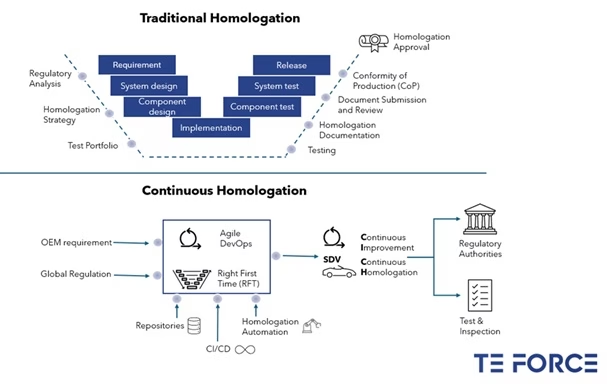
Requirements for homologation are changing rapidly. Long, rigid approval cycles are giving way to flexible processes that allow faster updates and continuous compliance—without compromising safety standards. Traditionally: V-model from regulatory analysis to type approval. Continuous: Modular approvals, proactive engagement with authorities, continuous updates. Core principle: Decoupling safety-critical (ASIL) and non-critical (QM) functions to balance agility and safety. 📌 Bottom line: Modern homologation processes secure future readiness, market access, and competitiveness. 💡 At TE Force, we help OEMs and suppliers make homologation (R155/R156) efficient and future-proof. #Automotive #TEForce #Homologation #TypeApproval #Compliance #Innovation
-
Over-the-Air Updates – Powering Connected Mobility
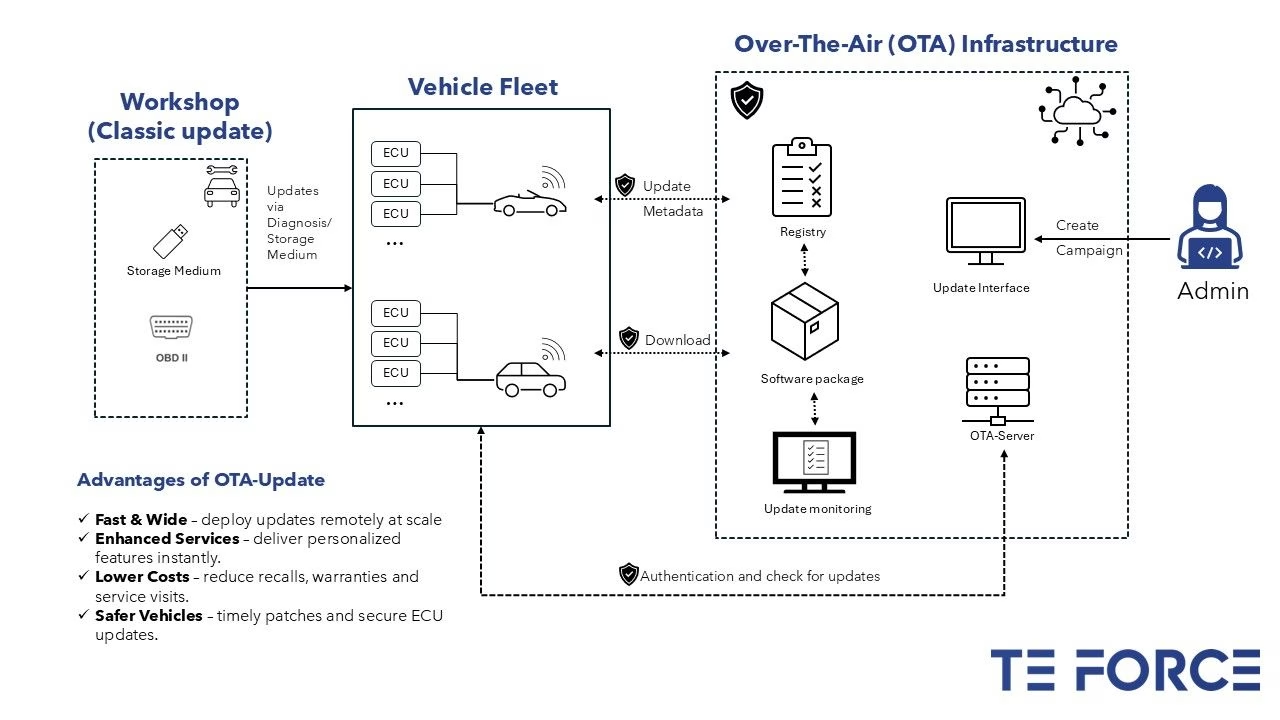
🚀 Over-the-Air Updates – Powering Connected Mobility Traditionally, vehicle software updates were carried out via OBD2 ports or physical storage media – often time-consuming, costly, and burdensome for workshops and vehicle owners. Over-the-Air (OTA) updates completely change the game: firmware, software, and security updates can be deployed remotely, quickly and at scale. This enables OEMs and fleet operators to: ➤ Remote updates at scale – no workshop visits needed➤ Personalized services instantly – e.g., navigation, Car2X➤ Lower warranty & recall costs – fewer service center visits➤ Safer vehicles – timely patches & secure ECU updates 💡 At TE Force, we…
-
Rethinking Automotive Testing: The Role of Virtual ECUs
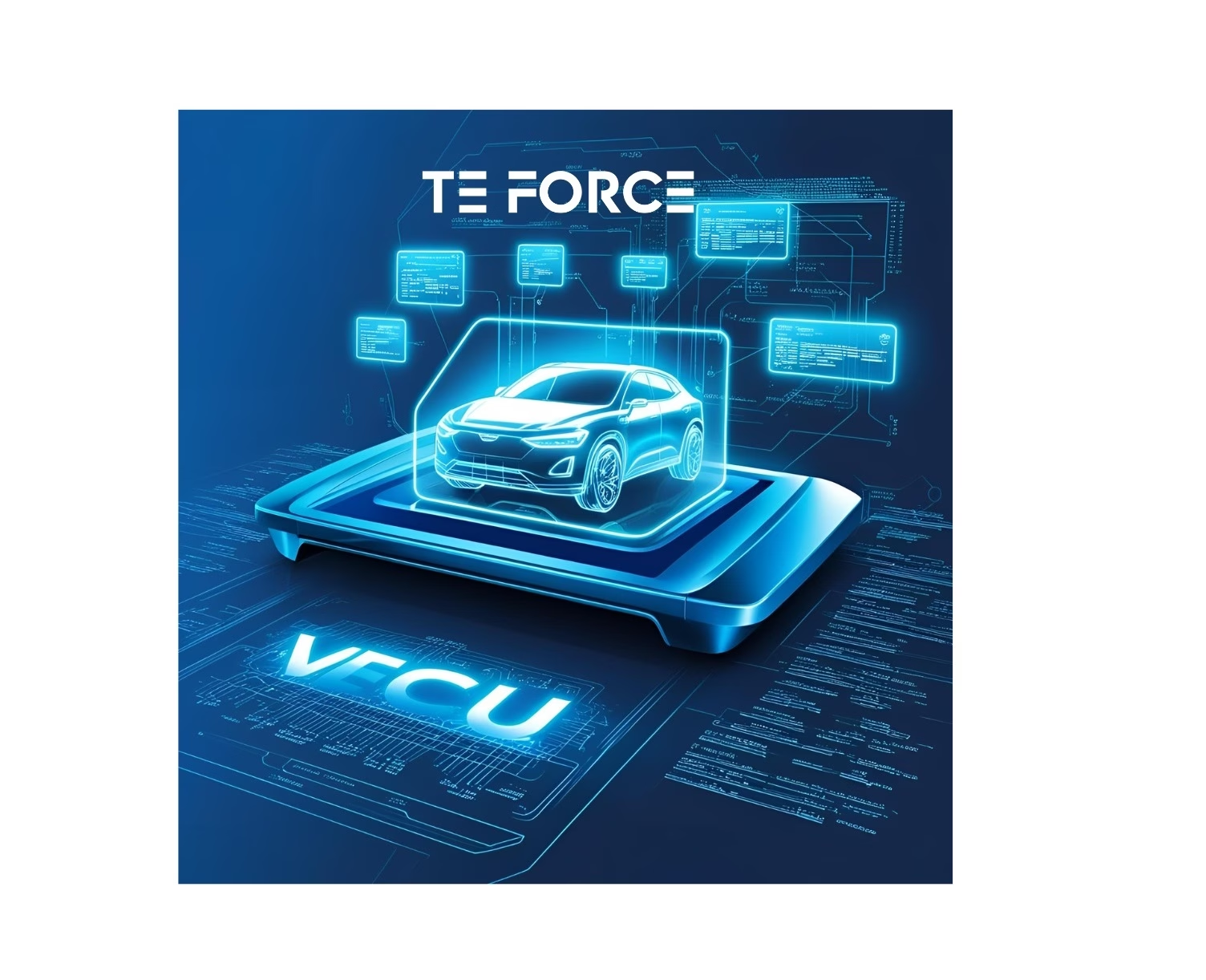
Introduction In the article on Software-Defined Vehicles (SDVs), we explored how the automotive industry is entering a new era — one where software plays a central role in vehicle functionality, adaptability, and innovation. As we look toward the development of future vehicles, it’s no longer enough to understand only mechanical systems; understanding software development processes has become equally essential. Unlike traditional hardware development, which has long followed the structured V-model, software development in the SDV context is increasingly a hybrid of V-model and DevOps methodologies. While the strengths of the V-model — particularly in safety-critical systems — remain highly relevant,…